The Hidden Struggle of Powering a Woodland Dream
Buying a woodland cabin sounds like the ultimate escape—until your phone dies, the fridge stops running, and you realize how dark the woods actually get. If you are surrounded by 60-foot pines, slapping a standard solar panel on your roof just isn't going to cut it. Let’s talk about how you can actually get reliable electricity in a deep forest without cutting down half of your beautiful trees to make it happen.
Many people buy remote woodland properties expecting a simple, quiet life. But the excitement fades fast when you realize that thick trees and solar power are natural enemies. You start wondering if you will have enough electricity to keep your refrigerator running or your food from spoiling.
This uncertainty ruins the peace of mind that pushed you toward nature in the first place. Instead of relaxing by the fire, you find yourself obsessively checking battery monitors. Every cloudy day feels like a personal threat to your basic comfort.
People living off-grid in deep woods often suffer from "power panic." You start rationing electricity so strictly that you forget to actually enjoy your wilderness home. Your daily routine becomes a stressful math problem of counting watts and hoping the sun peaks through the branches.
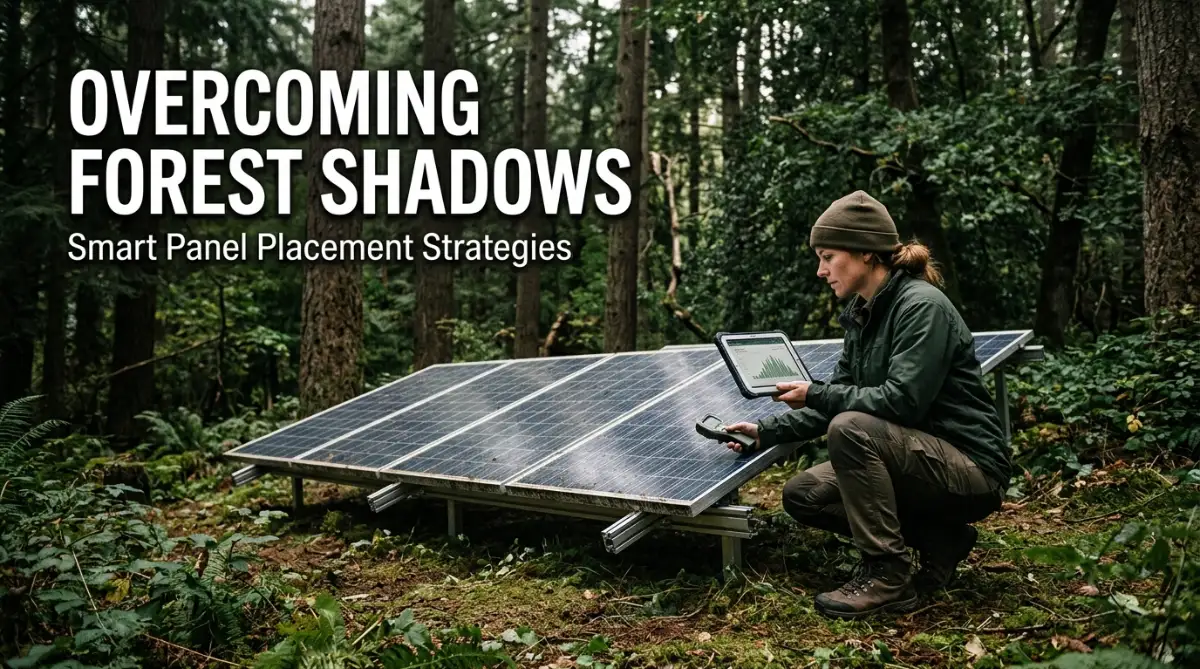
Forest Solar Survival Guide (At a Glance)
- Skip the roof: Always use ground-mounted panels in natural forest clearings.
- Panel tech matters: Buy half-cut panels with microinverters so one tree branch doesn't shut down your whole system.
- Ditch lead-acid: Use Lithium (LiFePO4) batteries to absorb weak sunlight fast.
- Go big on wires: Use oversized copper wiring to prevent power loss over long distances.
Decoding the Sunlight Puzzle in a Dense Forest
Designing a solar system for a regular house is pretty straightforward. Doing it in a thick forest requires a completely different mindset. The trees around your cabin are living, growing obstacles that block your primary source of energy.
You need to understand how the sun moves across your specific property throughout different seasons. The sun sits much lower in the sky during the winter months, creating massive shadows that did not exist during summer. You must map out these shadow patterns before buying a single piece of equipment.
Many beginners make the mistake of placing panels on the cabin roof simply because it looks normal. In a heavily wooded area, the roof is often the worst possible place for your panels.
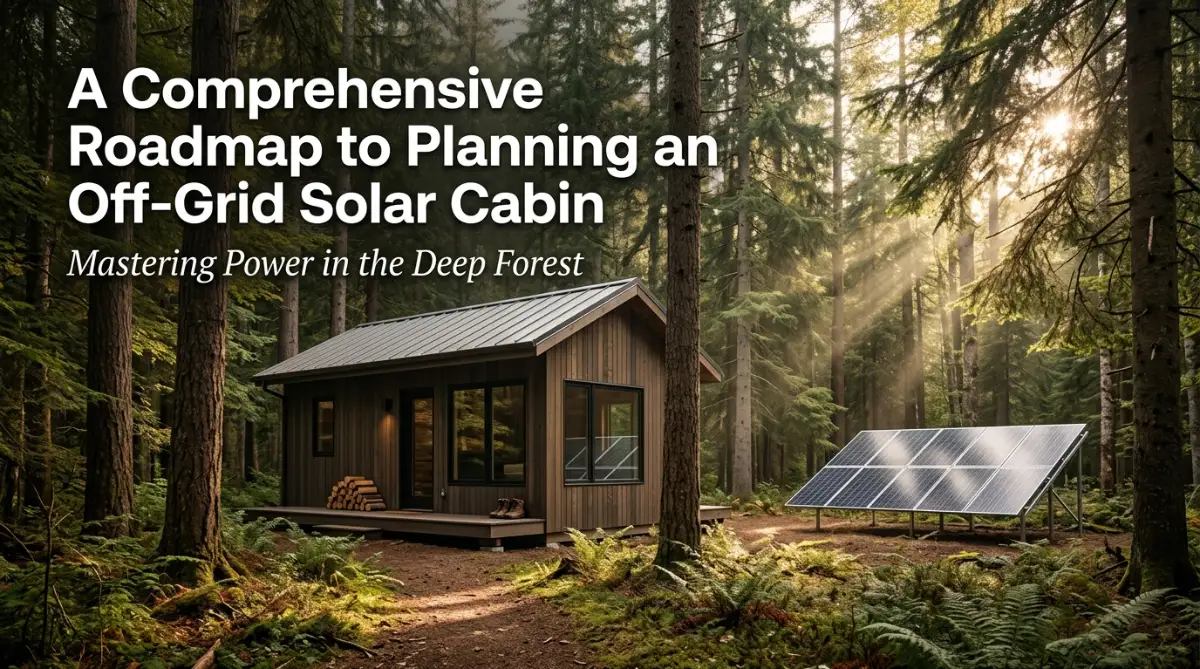
Instead, you need to hunt for the natural clearings on your land. A ground-mounted solar array located a couple of hundred feet away from the cabin often performs significantly better. You can safely trench the wires underground to bring that harvested power back to your home.
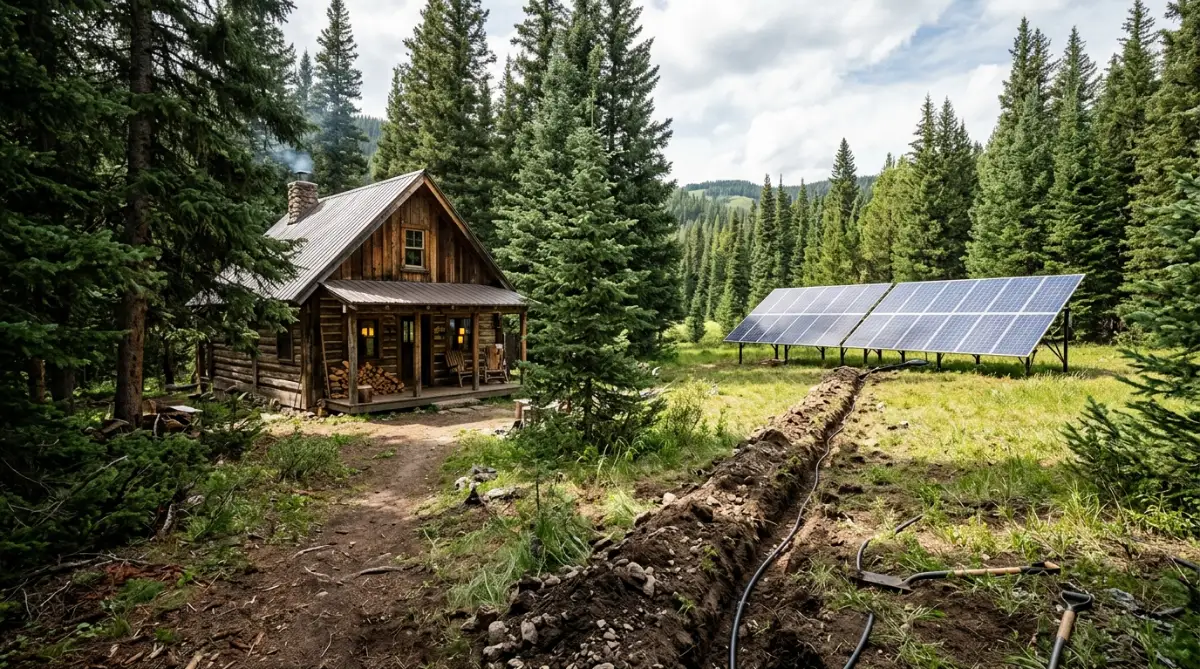
This approach gives you the flexibility to aim your panels perfectly south. It also makes clearing snow off the panels infinitely easier during the freezing months. Trying to climb an icy cabin roof to sweep off snow is a dangerous game you do not want to play.
Pro Tip: I learned this the hard way during my first year in the woods. I set up my expensive solar array right next to a small, harmless-looking oak sapling. A few seasons later, that sapling exploded in size, throwing thick shade over half my panels and cutting my power generation in half. Always account for future tree growth when picking your final spot.
Choosing the Right Panels for Low-Light Conditions
Not all solar panels handle shade the same way. When you are surrounded by a deep forest, even a single tree branch casting a shadow can shut down an entire row of standard panels.
You need to look for panels designed with half-cut cell technology or those that handle partial shading well. These panels are split into multiple zones. If a shadow hits the top half, the bottom half continues to pump out electricity.
Another smart strategy is using microinverters or power optimizers on each individual panel. In a standard setup, if one panel gets shaded by a tall pine, the entire system's output drops to match that weakest link.
With optimizers, each panel works independently. If a shadow covers one panel, the rest of your array keeps working at maximum capacity. This small design change can easily increase your daily energy harvest by a huge margin.
My Go-To Apps for Tracking Forest Shadows
Before you buy a single solar panel, you have to map out where the sun actually hits your land. I highly recommend using your smartphone to do the heavy lifting.
- Sunseeker: This app uses your camera to show the sun's exact path across your sky for any day of the year.
- Lumos: Great for seeing how long a specific tree shadow will block your chosen clearing.
- Spending $10 on a tracker app will save you thousands of dollars in misplaced solar equipment.
Watch This Essential Solar Breakdown
If you want to truly understand how partial shading destroys your power output, this visual demonstration will save you from making a very expensive mistake.
The Heart of the System: Storing What You Catch
Catching sunlight in the forest is only half the battle. Storing that energy efficiently is where your off-grid dream either succeeds or fails.
Think of your battery bank like a giant bucket of water, and your solar panels are a small cup trying to fill it up. In a dense forest, you only have a few hours of direct sunlight to pour water into that bucket. You need a battery that accepts power quickly and gives it back freely.
This is exactly why older lead-acid batteries are a terrible choice for woodland cabins. They charge very slowly, meaning you miss out on capturing power during those brief windows of clear sunlight. They also require constant maintenance and venting, which is a hassle in a remote location.
Lithium iron phosphate (LiFePO4) batteries are the ultimate game-changer for shaded properties. They absorb energy extremely fast, making the most of every single sunbeam that hits your panels.
They also allow you to use almost all of their stored energy without taking damage. A lead-acid battery will permanently break if you drain it too low, which is easy to do during a cloudy week in the woods. Lithium batteries completely eliminate this constant worry.
Myth vs Reality: Forest Solar Power
- The Myth: You have to cut down every single tree around your property to make solar work.
- The Reality: You only need to create a strategic "solar window" facing true south. By carefully trimming a few specific branches and positioning a ground mount wisely, you can keep your beautiful forest intact.
Sizing Your Equipment for the Worst-Case Scenario
When planning a solar system for a sunny, open field, you can rely on average daily weather data. When building in a deep forest, you must plan for the absolute worst weather possible.
You need to calculate your daily energy usage and then double or triple your battery capacity. If a thick fog rolls in or an unexpected snowstorm covers your area, you might go several days without generating meaningful power.
You should realistically aim for at least three to five days of battery backup. This gives you peace of mind knowing your food will stay cold and your lights will stay on, even if the sun refuses to shine.
Your solar panel array also needs to be oversized. If your calculations say you need two thousand watts to power your life, install three or four thousand watts instead.
In a forest, you will rarely get 100% efficiency due to scattered shadows and natural debris like leaves and pine needles. Oversizing your array ensures that even on a hazy, partially shaded day, you are still trickling enough power into your batteries to survive.
Managing Expectations and Alternative Backups
Living off-grid requires a deep shift in your relationship with electricity. You can build the best woodland solar setup in the world, but nature will always have the final say.
There will be weeks in the dead of winter where the sun simply does not appear. The trees will block what little ambient light exists, and your battery monitor will slowly drop closer to zero. This is a completely normal part of the off-grid experience.
To prevent totally losing power, every serious forest cabin needs a secondary charging source. A portable inverter generator is the perfect safety net for those stubborn, dark weeks.
You do not need to run the generator all day. You simply hook it up to your system's inverter charger and run it for a few hours to quickly top off your lithium batteries. This hybrid approach takes all the remaining stress out of living in the wild.
Understanding Your True Energy Loads
Before you buy wires, panels, or batteries, you need to understand exactly what consumes power in your cabin. Heating and cooling are massive energy drains that solar struggles to support in shaded areas.
Instead of trying to run electric space heaters, use a traditional wood stove for heat. Wood is abundant in the forest and costs you nothing but your time and effort. This simple switch saves thousands of dollars in solar equipment.
Cooking with electricity is another heavy burden on a small woodland system. An electric oven can drain a huge battery bank in just a few hours.
Switching to a propane-powered stove and oven is a very smart move. Propane is easy to transport, stores safely for long periods, and frees up your valuable solar energy for important things like lighting, water pumps, and refrigeration.
The Reality of Wire Sizing and Voltage Drops
Because you will likely place your solar panels far away from your forest cabin to catch the sun, the wiring becomes a serious issue. When electricity travels over a long distance, it naturally loses some of its power. This is known as a voltage drop.
If you use wires that are too thin for the distance, you will lose a huge chunk of the solar energy you fought so hard to capture. It is like trying to drink a thick milkshake through a tiny cocktail straw.
You must calculate the exact distance from your ground-mounted panels to your battery bank inside the cabin. You will likely need to buy much thicker, heavier copper wire than a standard home installation requires.
Thick wire is expensive, but it ensures that every single drop of precious forest sunlight actually makes it into your batteries. Do not try to save money on wiring, because it will slowly drain your system's efficiency every single day.
Here is a quick look at how distance impacts your planning:
Keeping the System Safe from Wilderness Threats
A deep forest environment is incredibly hostile to modern electronics. You are not just dealing with shadows and snow; you are dealing with wildlife, moisture, and falling debris.
Squirrels, mice, and raccoons absolutely love chewing on electrical wires. If you leave your solar cables exposed on the ground, they will eventually become a snack for a curious animal.
You must protect all your exterior wiring by running it through tough PVC conduit piping. Burying this conduit underground is the safest and cleanest way to connect your distant panels to your cabin.
Moisture is another silent killer of off-grid setups. Morning dew, heavy fog, and blowing rain can easily sneak into poorly sealed connection boxes. Make sure every single outdoor connector is rated for severe weather and properly sealed with silicone if necessary.
By paying attention to these small, practical details, you build a power system that respects the forest environment while giving you the modern comforts you deserve. You transform your cabin from a dark, stressful shelter into a warm, brightly lit home hidden in the trees.
Unlocking Next-Level Efficiency in Shaded Locations
Now that you have your basic layout planned, we need to talk about getting maximum power out of a less-than-perfect environment. I spent my first two winters in the woods shivering because I did not understand how to squeeze every last drop of energy from the weak winter sun. You do not have to repeat my freezing mistakes.
When you live deep in a forest, you cannot afford to waste a single ray of light. Standard solar advice simply does not apply when you are fighting tall trees and long shadows. You need to outsmart the environment using a few brilliant engineering tricks that most beginners never even consider.
Let me walk you through the exact strategies that completely changed my off-grid experience. These are the specific upgrades that took my cabin from a dark, stressful shelter to a brilliantly lit, comfortable home.
The Magic of MPPT Charge Controllers
Your solar panels collect energy, but they do not send it directly to your batteries. The power must travel through a device called a charge controller first. If you buy a cheap PWM (Pulse Width Modulation) charge controller for a forest cabin, you are basically throwing free energy in the trash.
PWM controllers are old technology that force your expensive solar panels to lower their voltage to match your battery. This means if a shadow hits one corner of your panel, a massive amount of potential power is instantly lost. You cannot afford this kind of waste in a shaded environment.
Instead, you must invest in an MPPT (Maximum Power Point Tracking) charge controller. These smart devices constantly monitor the exact voltage and current coming from your panels. They magically convert excess voltage into extra amps, giving you up to thirty percent more power every single day.
Quick Math: Why PWM Fails in the Woods
Let’s look at a simple real-world comparison. If you have a shaded 400-watt panel on a cold, cloudy day:
- With an old PWM Controller: You might only pull in about 60 to 70 watts because the controller chokes on the low voltage.
- With a smart MPPT Controller: It adjusts on the fly and can grab 120 to 140 watts from that same weak sunlight.
- In the forest, that extra 70 watts is the difference between keeping your food cold or throwing out spoiled groceries.
For a deep woods setup, an MPPT controller is your best friend. Even on cloudy days or when tree branches cast weird shadows, it works tirelessly to squeeze every last usable watt out of your array. If you want to dive deeper into how solar energy behaves under tricky weather, you can read detailed solar irradiance studies by the National Renewable Energy Laboratory.
Mastering Cold Weather Battery Protection
Here is a terrifying fact that almost destroyed my first solar setup: you cannot charge a lithium battery when the temperature drops below freezing. If you try to push solar power into a freezing lithium battery, it will permanently ruin the internal cells within seconds.
Many people build their off-grid cabins in areas that get extremely cold during the winter months. If you store your batteries in an unheated shed outside the cabin, you are setting yourself up for a massive financial disaster. You must keep your power bank warm to keep it functioning.
The easiest solution is to build a dedicated, heavily insulated utility closet right inside your main living space. By keeping the batteries in the same room where your wood stove burns, they stay warm, safe, and ready to accept a rapid charge when the sun finally comes out.
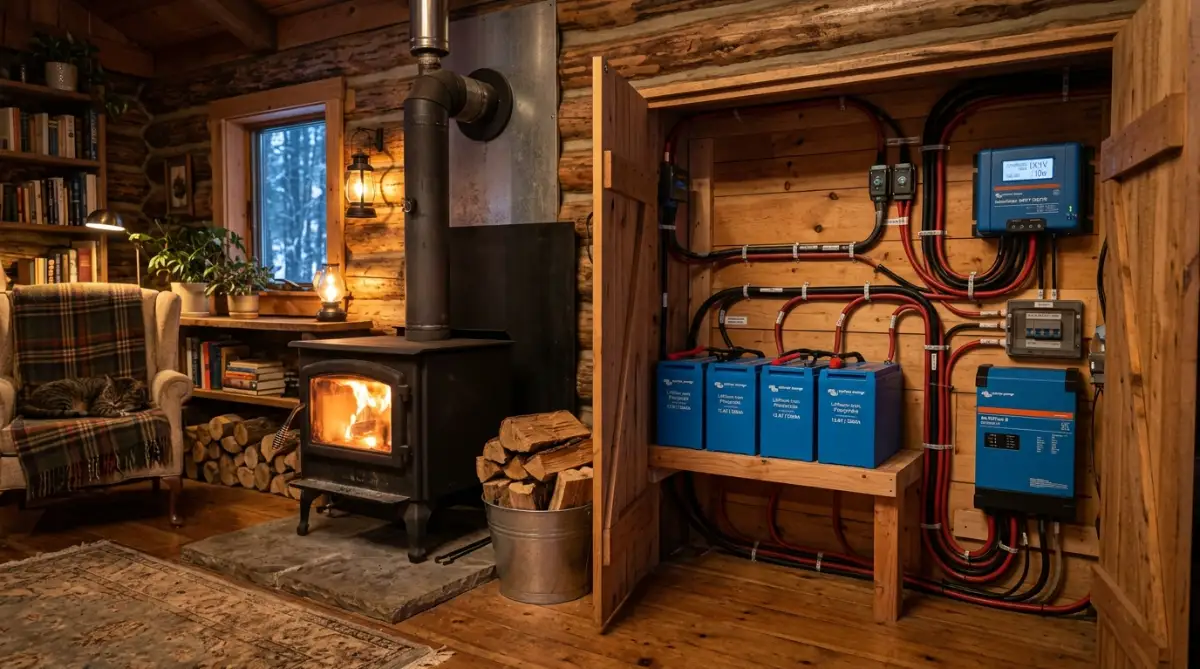
If you cannot keep them inside, you need to buy lithium batteries with built-in internal heating pads. These smart batteries use a tiny bit of incoming solar energy to warm themselves up before they allow the main charge to enter. You can learn more about how cold weather destroys battery chemistry by checking out guidelines from Battery University.
Harnessing the Power of Snow and Reflection
If you live in a forest that gets snow, you actually have a secret weapon for generating more electricity. Fresh white snow acts like a giant, natural mirror reflecting sunlight in every direction. We can use this bright reflection to our advantage.
This is where bifacial solar panels come into play. Standard solar panels only collect light on the front side. Bifacial panels have glass on the front and the back, allowing them to absorb sunlight from both directions simultaneously.
When the winter sun hits the bright white snow on the ground, that light bounces directly up into the back of your bifacial panels. In a dark forest setting, this reflected light can easily boost your overall energy production by ten to twenty percent. Just make sure you mount the panels high enough off the ground so the accumulating snow does not bury them.
Automating Your Heavy Energy Loads
When you have limited sunlight, you have to be incredibly smart about when you use your power. Running a heavy appliance at night drains your precious battery reserve. Running that same appliance at noon on a sunny day uses free power straight from the panels, leaving your battery completely full.
This strategy is called load shifting, and it is a massive game-changer for off-grid living. For example, my well pump takes a huge surge of energy to pull water up from deep underground. I only run that pump during the brightest part of the day to fill a large holding tank inside my cabin.
By shifting this heavy task to peak sunlight hours, my batteries never feel the strain of the water pump. Think of it like managing a complicated timeline; just as you might need to figure out how to connect your email client to project management tools step by step to keep your digital work organized, you must actively organize your daily energy schedule. You run the vacuum, do the laundry, and pump the water only when the sun is shining directly on your panels.
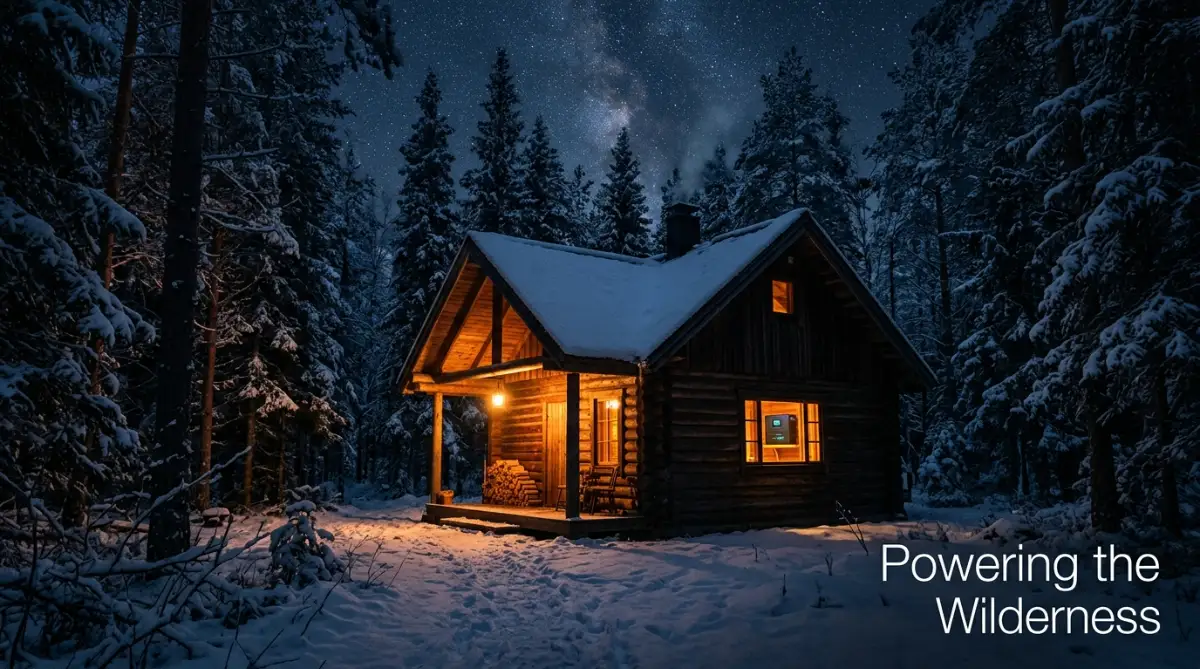
The Hidden Traps That Will Destroy Your Forest Solar Setup
Building a reliable off-grid system is tough, but doing it in a dense forest is basically playing the game on hard mode. I have watched so many excited beginners make the exact same mistakes, turning their beautiful woodland retreat into a dark, frustrating nightmare.
The biggest problem is that solar mistakes are rarely cheap. Replacing a ruined battery bank or completely rewiring an entire ground-mounted array can cost you thousands of dollars. You must learn to spot these traps before you spend a single penny on equipment.
Let's break down the most common and dangerous errors people make when setting up power in the woods. Avoiding these pitfalls will save you from spending freezing nights in the dark wondering where it all went wrong.
The Silent Killer: Ignoring Phantom Power Drains
You might think your cabin is completely powered down when you turn off the lights and go to bed. Unfortunately, that is rarely the truth. Most modern electronics secretly drain power from your batteries even when they are supposedly turned off.
We call this "phantom load." Your television, microwave clock, internet router, and even the solar inverter itself consume a steady trickle of electricity twenty-four hours a day. In a regular house, you never notice this. In a shaded forest cabin, this invisible drain can easily empty your batteries over a cloudy weekend.
It is remarkably similar to how sneaky background apps steal your digital data; much like discovering how third-party AI agents secretly access your personal calendar, these phantom loads secretly rob your energy reserves.
The easiest fix is to put all your small electronics on heavy-duty power strips with physical on/off switches. When you go to sleep, you simply flip the switch, physically cutting the connection. Also, make sure you buy a high-quality inverter with a low "idle consumption" rating to protect your overnight battery levels.
Trusting Factory Panel Ratings in Shady Spots
When you buy a 400-watt solar panel, you naturally assume it will give you 400 watts of power. In a forest environment, this assumption will completely ruin your energy math. Factory ratings are tested in perfect laboratory conditions with blasting artificial sunlight and zero shadows.
If you design your battery bank based on these perfect factory numbers, you will run out of power constantly. A 400-watt panel sitting under a thin canopy of pine needles might only give you 150 watts on a good day. You have to be deeply realistic about your location.
When you sit down to plan your system, you must wildly oversize your panel array. If you read a guide on how to calculate the roof square footage needed to power a 4-bedroom house, you will see they plan for clear skies. For a forest cabin, you should practically double the amount of panels you think you need. Solar panels are relatively cheap these days, but peace of mind in the wilderness is absolutely priceless.
Going to War with Trees Instead of Managing Them
Many beginners panic when they realize how much shade covers their new property. Their first reaction is to rent a massive chainsaw and start clear-cutting every beautiful tree within a hundred yards. This completely destroys the natural beauty you moved to the forest to enjoy.
You do not need an ugly, barren clearing to make solar work. You just need a calculated, strategic window aimed precisely toward the southern sky. Instead of cutting down entire mature oaks and pines, look into selective branch pruning.
By simply removing the lower limbs and thinning out specific branches that block the winter sun path, you can dramatically increase your light harvest. If you are unsure which trees are safe to trim without killing them, always consult guidelines from trusted forestry experts, like those found at university extension forestry programs. Treat your trees as partners, not enemies.
Buying Cheap, Undersized Copper Wiring
We briefly touched on this earlier, but I cannot stress enough how dangerous and wasteful thin wires are. Because your panels will likely be mounted far away from the cabin to catch the sun, the electricity has a long journey to travel.
If you use cheap, thin wires, the electricity meets heavy resistance along the way. The wire actually heats up, and your precious solar energy is lost as useless heat radiating into the dirt. Worse yet, thin wires carrying heavy direct current (DC) power can easily start a terrifying electrical fire.
Always use a professional wire gauge calculator to figure out exactly how thick your cables need to be for the specific distance you are trenching. Buying extra-thick, pure copper wire hurts your wallet initially, but it ensures your system runs safely and perfectly for the next twenty years. You can find more helpful home and tech guides covering similar DIY planning at Global24Info.
Your Path to True Woodland Independence
Living off the grid in a deeply shaded forest is completely possible, highly rewarding, and incredibly peaceful once you get the math right. You just have to stop fighting the environment and start working with it.
By placing your panels strategically, heavily oversizing your battery bank, and protecting your equipment from the harsh elements, you create an unbreakable system. You get to enjoy the quiet, isolated magic of the deep woods without giving up the comforts of modern life.
You no longer have to stare nervously at battery monitors or panic when a snowstorm rolls in. You will know deep down that your system is over-engineered to handle whatever nature throws at it. That feeling of total self-reliance is exactly why we choose this lifestyle in the first place.
A Personal Word from My Forest to Yours
I know exactly how overwhelming all this planning feels right now because I stood in those exact same muddy boots. But I promise you, the moment you flip that switch and see your cabin light up using nothing but the hidden forest sun, every single second of hard work pays off immensely. You have the knowledge now, so go out there, embrace the shadows, and build the peaceful wilderness retreat you have always dreamed of!
Common Questions About Woodland Solar Setups
Will solar panels actually work in a heavily wooded area?
Yes, they absolutely work, but you cannot just slap them on the roof and hope for the best. You need to find a natural clearing, use a ground mount facing south, and drastically oversize your panel array to compensate for the scattered shadows.
Can I mount my solar panels directly onto a tall tree?
While it sounds like a clever idea to get above the shade, it is highly discouraged. Trees constantly sway in the wind, which will eventually snap your mounting hardware or tear your expensive copper wires right out of their sockets.
How many batteries do I really need for a forest cabin?
You need enough battery storage to run your daily life for at least three to five full days without any sunlight. Cloudy weeks are very common in the woods, and a massive lithium battery bank is the only way to comfortably survive those dark periods.
Do I absolutely need a gas generator if I have solar?
If you live in a deep forest year-round, a backup inverter generator is basically mandatory for your peace of mind. During the darkest weeks of winter when the sun simply refuses to shine, running a generator for just two hours will safely refill your batteries.
Should I buy lead-acid or lithium batteries for my cabin?
You should always choose lithium iron phosphate (LiFePO4) batteries for a shaded property. They charge incredibly fast, allowing you to capture every brief moment of sunlight, whereas old lead-acid batteries charge too slowly and waste precious energy.
Disclaimer: The information provided in this article is for educational and informational purposes only. Designing and installing off-grid solar systems involves working with dangerous high-voltage electricity. Always consult with a licensed electrician or certified solar installer before purchasing equipment or attempting to wire a power system yourself to ensure local safety codes and regulations are strictly met.