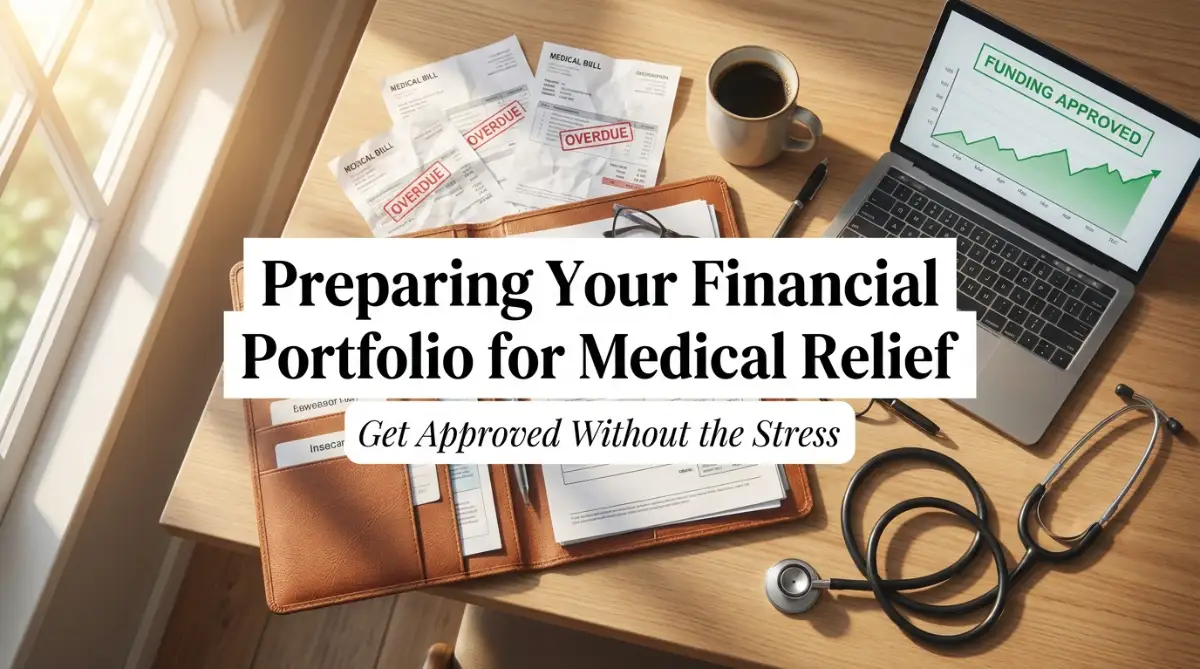
The Hidden Weight of Healthcare Costs: My Personal Wake-Up Call
I still remember the exact moment my heart dropped into my stomach. I was sitting at my kitchen table, staring blankly at a hospital bill that had just arrived in the mail. My hands were literally shaking as I read the final amount due.
I had always considered myself a responsible person when it came to money. I paid my bills on time, kept a small savings account, and lived well within my means. But nothing could have prepared me for the financial shock of an unexpected medical emergency.
Suddenly, my carefully planned budget felt like a joke. I found myself losing sleep, constantly refreshing my bank app, and wondering how I would ever pay this off without losing everything I had worked so hard for. I felt completely trapped and isolated.
This is the harsh reality for so many people dealing with sudden health crises today. You try your best to focus on healing, but the mounting financial pressure makes recovery almost impossible. Medical debt does not just drain your bank account; it silently drains your mental peace.
Every single day, ordinary families are forced to make impossible choices. Do you pay for your necessary prescription medications, or do you pay the electricity bill? Do you follow up with the specialist, or do you skip the appointment because the copay is just too high?
These daily struggles create a heavy cloud of anxiety that follows you everywhere. You might find yourself snapping at loved ones, completely unable to focus at work, and constantly feeling a tight knot in your chest. The financial system often feels rigged against you, especially when you are already in a vulnerable state.
Transforming Your Finances: Positioning Yourself for Approval
When you are drowning in hospital bills, finding a way out feels like trying to solve a puzzle in the dark. However, there are specialized financial programs designed to help you breathe again. Low-interest medical relief funds exist exactly for this reason.
These funds act as a safety net for people who make too much to qualify for free charity care, but not enough to pay massive out-of-pocket expenses. The catch is that the application process can be incredibly strict. The review committees want a clear, honest picture of your financial situation before they hand over any support.
To get approved, you need to present your financial portfolio in a way that proves you genuinely need the help, but also shows you are responsible enough to manage the low-interest terms. This requires a bit of strategic organization. Let's break down exactly how you can restructure your documents and accounts to match what these committees are looking for.

Getting a Clear Picture of Your Liquid Assets
The first thing any medical relief committee will look at is your liquidity. Liquidity simply refers to the cash you can access immediately without selling off major property. They want to know if you secretly have thousands of dollars hiding in a checking account.
If your primary bank account mixes your daily spending money with your long-term savings, it can send the wrong message. A committee member might glance at a combined balance and assume you have plenty of cash to cover your hospital stay. They do not automatically know that a chunk of that money is reserved for next month's rent or your child's tuition.
To fix this, you need to separate your funds immediately. Keep your everyday living expenses in one checking account and move your specific, dedicated savings into a separate account. Make sure to clearly label these accounts if your bank allows it. This simple division creates a much clearer, more transparent picture of what you actually have available for medical costs.
Here is a quick video explaining exactly how to organize your bank statements for loan and grant applications so you never get unfairly rejected.
Documenting Your Monthly Cash Flow and Obligations
Next, you need to prove exactly where your money goes every single month. Many applicants get denied because their income looks decent on paper, but the committee fails to see the heavy fixed expenses they carry. You must paint a complete picture of your financial reality.
Start by gathering two full months of pay stubs, but do not stop there. You need to create a simple, honest spreadsheet of your mandatory monthly obligations. This includes your mortgage or rent, auto loans, basic utilities, and minimum credit card payments.
Do not include lifestyle choices like expensive gym memberships or streaming services in this specific list. The goal is to show the reviewers your true "debt-to-income" ratio based purely on survival needs. When they see that 70% of your income is already eaten up by basic living costs, your need for a low-interest relief fund becomes undeniable.
My biggest mistake during my first application was trying to make my finances look "better" than they actually were. I thought appearing totally broke would make me look irresponsible, so I hid some of my credit card debt. That completely backfired. Honesty is your biggest asset here. I quickly learned that these committees are looking for genuine transparency, not perfection.
Navigating the Credit Report Maze
Your credit profile tells a story about your financial habits long before you ever had a medical emergency. While relief funds are often more forgiving than traditional banks, they still pull your credit report. They want to see a history of good intentions.
Before you even submit an application, you must pull your own credit report and scan it for errors. Medical billing is notoriously messy. It is incredibly common for hospital billing departments to send an unpaid bill to collections even while you are still negotiating the charges with them.
If you spot a medical collection on your report that should not be there, dispute it immediately with the credit bureaus. You can also attach a short letter of explanation to your relief fund application. Simply explain that the negative mark is a disputed medical charge, not a sign of financial irresponsibility.
Committees appreciate applicants who are proactive. By addressing the elephant in the room upfront, you control the narrative. You show them that you are actively managing your financial health despite the heavy medical burdens you are facing.
The Power of Hardship Letters
Numbers on a spreadsheet are cold and robotic. They do not tell the committee that you had to take unpaid leave from work because of your surgery. They do not explain that your spouse had to cut their hours to become your primary caregiver.
This is where the hardship letter comes in. A hardship letter is a one-page document where you explain the human side of your financial portfolio. This is your chance to connect with the reviewer on an emotional, empathetic level.
Keep the letter highly professional but honest. Start by explaining the medical event that caused the financial strain. Then, detail exactly how this event impacted your household income. Finally, express your commitment to repaying the low-interest fund if approved.
Always end your letter on a positive, forward-looking note. Let them know that this relief fund is the exact stepping stone you need to get back on your feet and become financially stable again. A well-written hardship letter often tips the scale in your favor when your financial numbers are on the borderline of their requirements.
Understanding Household Income vs. Individual Income
One massive point of confusion in the application process is how income is calculated. Many relief funds look at your total household income, not just your individual paycheck. This catches many families off guard and leads to instant rejections.
If you are married or live with an adult partner who shares expenses, their income might be counted against your eligibility limits. You need to read the specific guidelines of the relief fund you are applying for. Some programs make exceptions if you file your taxes separately.
If your household income puts you slightly over the qualification limit, do not panic just yet. Look for programs that calculate eligibility based on your "Adjusted Gross Income" (AGI) rather than your gross income. Your AGI takes into account certain deductions, which might just lower your official income enough to qualify.
You can also look for funds that base their decisions on the size of the medical bill compared to your income. For example, if your hospital bill is equal to 30% of your annual household income, many programs will approve you regardless of exactly how much money you make. Always ask the program coordinator how they weight these specific factors.
Separating Medical Debt from Consumer Debt
When preparing your portfolio, you must make a clear distinction between the debt you took on for fun and the debt you took on to survive. Relief funds view a maxed-out credit card very differently depending on what was purchased.
If you used your personal credit cards to pay for doctor visits, prescription drugs, or medical equipment, you need to prove it. Dig up the original receipts and highlight those specific transactions on your credit card statements.
Create a dedicated file labeled "Medical Expenses Paid via Credit." When the committee reviews your overall debt, they will see that you are not simply a reckless spender. They will understand that you were using every tool at your disposal to handle a health crisis.
This level of documentation shows immense financial maturity. It proves that you are organized, serious about your situation, and highly capable of handling a structured low-interest relief program. It takes a little extra time on a Sunday afternoon to gather these receipts, but it is entirely worth the effort.
Avoiding Common Portfolio Traps
People often rush through the preparation phase because the stress of the medical bills is so overwhelming. Unfortunately, rushing leads to sloppy mistakes that can cost you an approval. One of the biggest traps is moving large amounts of money right before applying.
If a reviewer sees a sudden, unexplained transfer of five thousand dollars out of your savings account a week before you applied, they will get suspicious. They might assume you are trying to hide assets to look poorer than you are.
If you legitimately had to use a large chunk of savings to pay for a home repair or a vehicle breakdown, keep the receipt. You need to be able to explain any major fluctuations in your bank accounts over the last three to six months. Transparency is always the best policy when someone else is evaluating your financial life.
Another common trap is leaving sections of the application blank. If a question does not apply to you, do not just skip it. Write "Not Applicable" or "N/A" clearly in the box. Leaving empty spaces makes your portfolio look incomplete, and busy committees will often toss incomplete applications straight into the rejection pile.
Take a deep breath and review your entire portfolio before you hit submit. Ask a trusted friend or family member to look it over with fresh eyes. Sometimes, a second person can spot a missing signature or an unclear bank statement that you completely overlooked. Small details matter when your financial future is on the line.
Next-Level Strategies for Securing Healthcare Relief
Once you have the basics of your financial portfolio sorted, it is time to look at the advanced moves. These are the steps that separate a borderline application from an instant approval. I learned these strategies the hard way, but you can use them right now to protect your peace of mind.
Most people assume that their income is a fixed, unchangeable number on their application. However, relief funds often calculate your eligibility using very specific financial metrics. You need to understand how to present your numbers legally and accurately to maximize your chances of getting help.
One of the biggest secrets is focusing on your Adjusted Gross Income instead of your total gross income. Your top-line salary might look too high to qualify for assistance. But once you factor in standard deductions, retirement contributions, and other legal adjustments, your actual readable income drops significantly.
You can learn exactly how these income thresholds are calculated by reviewing official IRS guidelines on adjusting gross income. Presenting your tax documents with this in mind shows the review committee your true, take-home reality. It paints a much more accurate picture of your daily financial struggle.
The Art of Pre-Application Negotiation
Never accept the first number printed on your hospital bill as the final truth. Before you even submit your portfolio for a relief loan, pick up the phone and call the hospital billing department. You have so much more power in this situation than you realize.
Simply ask for an itemized bill and review every single charge. Hospitals make billing errors constantly, charging for medications you never took or supplies you never used. By disputing these errors, you instantly lower the total amount of debt you need help with.
Once the bill is accurate, politely ask the billing manager if they offer a discount for self-pay patients or unrepresented balances. Many hospitals will knock off twenty to thirty percent just because you asked. When you finally understand your debt-to-income ratio and apply for the relief fund, you will be asking for a much smaller, more reasonable amount. Reviewers love applicants who actively try to reduce their own burdens.
Protecting What You Already Own
A major fear during this process is that a medical crisis will force you to lose your home or your primary vehicle. Some people panic and start selling off their personal items before they even apply for financial help. Please stop and take a deep breath before you make any drastic moves.
Most legitimate relief funds are designed specifically to prevent you from losing your basic assets. They want to see what you own, but they do not expect you to be completely destitute to qualify. You just need to document your assets clearly and honestly.
If you are a freelancer or a small business owner dealing with personal medical debt, keep your business finances totally separate from your personal portfolio. You must learn how to protect your personal assets to ensure your livelihood is not counted against your medical aid eligibility. Keep your business operating accounts out of the personal hardship conversation.
Staying Organized for the Long Haul
Getting approved for a low-interest medical relief fund is an amazing feeling. But keeping that funding active requires ongoing organization. Many programs require you to submit an updated financial snapshot every six months to prove you still need the assistance.
Create a simple physical folder or a secure digital folder on your computer today. Every time you get a new pay stub, a new medical bill, or a bank statement, drop a copy into that file. This turns a massive, stressful chore into a simple five-minute weekly habit.
If the relief fund you are approved for acts as a standard loan, pay close attention to the terms over time. Economic changes can sometimes affect loan structures. Knowing how to handle variable rate personal loans will keep you from being blindsided if your monthly payment shifts slightly. Always stay one step ahead of your paperwork.

Dangerous Financial Traps That Cause Instant Rejection
I have seen so many hardworking, honest people get their relief applications denied because of simple, avoidable mistakes. When you are operating out of fear and stress, you tend to make rushed decisions. These rushed decisions send major red flags to financial review committees.
The biggest and most heartbreaking mistake is moving your medical debt to standard consumer credit cards. Imagine you get a terrifying hospital bill and panic. You immediately pay it off using a high-interest credit card just to get the hospital off your back.
The moment you do that, your debt is no longer categorized as "medical debt." To the relief fund committee, it just looks like you went on a massive shopping spree. They will almost certainly deny your application because their funds are strictly reserved for healthcare balances, not credit card companies.
If you are ever in a tight spot and need safe ways to borrow fast cash during an emergency, look for specific medical financing first. Do not blindly swipe your regular credit card. You will lock yourself out of the best relief programs available.
The Pitfall of Aggressive Debt Consolidation
Another massive trap is falling for predatory debt relief companies while you are waiting for a true medical fund approval. You might see flashy commercials promising to wipe away your hospital bills overnight. They often ask you to stop paying your bills entirely and pay them a monthly fee instead.
These programs completely destroy your credit profile and make you look incredibly risky to legitimate, low-interest grant committees. Furthermore, these shady companies are famous for burying massive costs in their fine print. It is essential to be good at spotting hidden fees inside any debt consolidation contract before you sign your life away.
Stick to established, non-profit medical relief funds or direct hospital assistance programs. If a company tells you to intentionally default on your hospital bills, run the other way. You want your financial portfolio to show that you are trying your best, not intentionally breaking agreements.
Ignoring the Debt Collectors
Medical bills move to collection agencies surprisingly fast. Many people get so overwhelmed by the threatening letters that they just throw them in the trash unopened. They think that ignoring the problem will buy them time to build their portfolio.
Ignoring a medical collection agency is a fast track to ruining your chances for relief. When an account goes to collections, it damages your credit score and makes your financial situation look out of control. Instead, you need to open those letters and face them head-on.
You have specific legal rights when dealing with these agencies. The Consumer Financial Protection Bureau explains exactly how to handle medical debt collectors safely. By communicating with them and telling them you are currently applying for a medical relief fund, you can often pause the aggressive phone calls and buy yourself the legitimate time you need.
Applying Everywhere Out of Desperation
When you are scared about money, your first instinct is to cast a wide net. You might sit at your laptop at 2 AM and apply for ten different medical loans and relief programs at the same time. This is a very natural human reaction to stress.
However, every time you apply for a credit-based relief fund, they run a hard inquiry on your credit report. If a reviewer sees six recent inquiries, they assume you are desperately searching for cash and might be on the verge of bankruptcy. Applying for multiple personal loans will ruin your credit score and severely hurt your credibility.
Take your time. Research the top two or three programs that you legitimately qualify for based on your income and specific illness. Tailor your financial portfolio perfectly for those specific applications. A targeted, well-prepared approach always wins over a panicked, scattered one.
Your Personal Blueprint for Financial Healing
Taking control of your healthcare debt is not an overnight process, but it is entirely possible. You now have a clear roadmap to stop the panic and start organizing your financial life like a professional. The hardest part is simply taking that first step and looking at your numbers honestly.
Remember that review committees are made up of real people. They understand that medical emergencies happen to good, responsible families every single day. Your goal is simply to present your story clearly, back it up with organized documentation, and show them exactly why you deserve their help.
Start by separating your bank accounts and tracking your true living expenses this week. Pull your credit report, dispute any silly errors, and write an honest hardship letter from your heart. Avoid the common traps of hiding money or swiping high-interest credit cards in a panic.
If you follow this blueprint, you will transform your financial portfolio from a messy source of stress into a powerful tool for relief. You are not just organizing paperwork; you are actively fighting for your future. You absolutely have the strength to get through this challenging season.
I know how dark and heavy the weight of medical bills can feel when you are trying to heal. My biggest hope is that you take just one small action today, even if it is just opening a bill you have been hiding from. You deserve financial peace, and I believe you have everything it takes to secure it.
Common Questions About Medical Financial Assistance
Do I need perfect credit to get medical financial help?
No, you absolutely do not need perfect credit to qualify for relief funds. Many specialized healthcare programs are designed specifically for people whose finances have taken a massive hit. As long as you can explain your situation honestly, a lower score will not automatically disqualify you.
Can I apply if my medical bills are already in collections?
Yes, you can still apply for many assistance programs even after your bills have gone to collections. You should communicate with the collection agency to let them know you are seeking aid. Be sure to include the collection notices in your portfolio so the committee sees the full scope of your debt.
What counts as a medical hardship for these applications?
A medical hardship is generally defined as an illness or injury that severely limits your ability to pay for basic living expenses. This includes the direct cost of surgeries and medications, as well as lost wages from missing work. If your health event forced you to choose between paying rent and paying the hospital, you are experiencing a hardship.
How long does the approval process usually take?
The timeline really depends on the specific organization you are applying to. Some internal hospital programs can approve you in as little as two weeks if your paperwork is perfect. Larger national non-profit funds might take thirty to sixty days to review your portfolio thoroughly.
Will my spouse's income hurt my chances of getting approved?
Most programs look at your total household income, which includes your spouse's earnings. However, if your combined income is stretched incredibly thin by mandatory living expenses, you can still qualify. This is why detailing your monthly cash flow and family size on the application is so incredibly important.
Disclaimer: The information provided in this article is for educational and informational purposes only and does not constitute professional financial, tax, or legal advice. Medical relief programs, loan terms, and credit regulations change frequently. Always consult with a certified financial planner, legal professional, or direct program coordinator before making any major financial decisions or signing legal agreements related to debt relief.